
Will DJI Shift to AI-Powered Autopilot? A Closer Look at the Patents (2026 Update)
DJI is no stranger to innovation, and back in early 2025 a wave of patent activity hinted at something even more transformative: full-scale AI-powered autopilot. As automation became central to the drone industry's future, those filings looked like they might signal a major leap. This piece originally asked whether DJI would unlock AI autopilot in 2025 — so let's revisit the tech, look at what actually shipped by 2026, and separate the patents that turned into features from the ideas that are still speculative.
🤖 AI Autopilot: What It Means
An AI-powered autopilot system goes beyond simple obstacle avoidance. We’re talking about drones that make real-time decisions, adapt mid-flight, and even learn from past missions. This would allow DJI drones to autonomously perform complex tasks like:
- Precision mapping and surveying
- Subject tracking in dynamic environments
- Automated cinematography
- Real-time object recognition
🧾 The Patents That Sparked the Rumors
In late 2024, DJI filed several patents describing:
- Neural Network Flight Control – A system that learns optimal flight behavior based on terrain and sensor input.
- AI-Powered Target Recognition – Drones identify and lock onto moving targets without GPS.
- Self-Training Navigation Models – Allowing the drone to get "smarter" the more it flies.
These technologies were strikingly similar to those used in autonomous vehicles. By 2026, the second idea is the one that clearly made it into shipping hardware: ActiveTrack 360 on the Mavic 4 Pro tracks subjects and vehicles autonomously, making its own navigation choices to keep the shot, even at twilight or under city lights. The neural-flight-control and self-training concepts remain closer to the patent than the product — DJI's autonomy still leans on rule-based planning plus vision and LiDAR rather than a drone that retrains itself between flights.
📡 Real-World Use Cases
DJI already had semi-autonomous capabilities in drones like the Mavic 3 and Mini 4 Pro, and the 2026 lineup — the Mavic 4 Pro with omnidirectional plus LiDAR sensing, and the Avata 360 — has pushed that further still. A true AI autopilot would supercharge:
- Agriculture: Smarter crop scanning with reduced manual input
- Search and Rescue: Dynamic routing and thermal identification
- Cinematography: Intelligent camera movement without a pilot
- Logistics: True autonomous delivery at scale
🚀 So Where Did It Land in 2026?
DJI stayed tight-lipped, and there was no single "AI autopilot" announcement. Instead, the autonomy arrived in pieces across the flagship lineup: ActiveTrack 360 making real tracking decisions on its own, dual processors enabling obstacle avoidance at up to 40 mph in low light, a front LiDAR sensor that works down to 0.1 lux, and smarter return-to-home that routes around hazards. Reviewers describe assisted flight that is dramatically more capable than 2024 — yet still firmly pilot-supervised, not hands-off. For a running view of what's shipped and what's still rumored, see our 2026 product tracker.
Final Thought
The patents pointed at a future where drones fly themselves. In 2026 DJI is most of the way to the assisted-flight version of that vision — confident tracking, multi-sensor awareness, smarter failsafes — without crossing into full autopilot. If and when DJI closes that last gap, it could redefine what drones are capable of, not just in the sky, but in every industry they touch.
DJI Mini 4 Pro (DJI RC 2): https://amzn.to/4p7DN28
DJI Flip With RC 2 Screen Remote Controller: https://amzn.to/47RskwE
DJI Neo: https://amzn.to/47zKggb
DJI Mini 3: https://amzn.to/4nMVNxu
Follow us on:
X: @djirumor
bsky.app: @djirumor.com
Related Articles
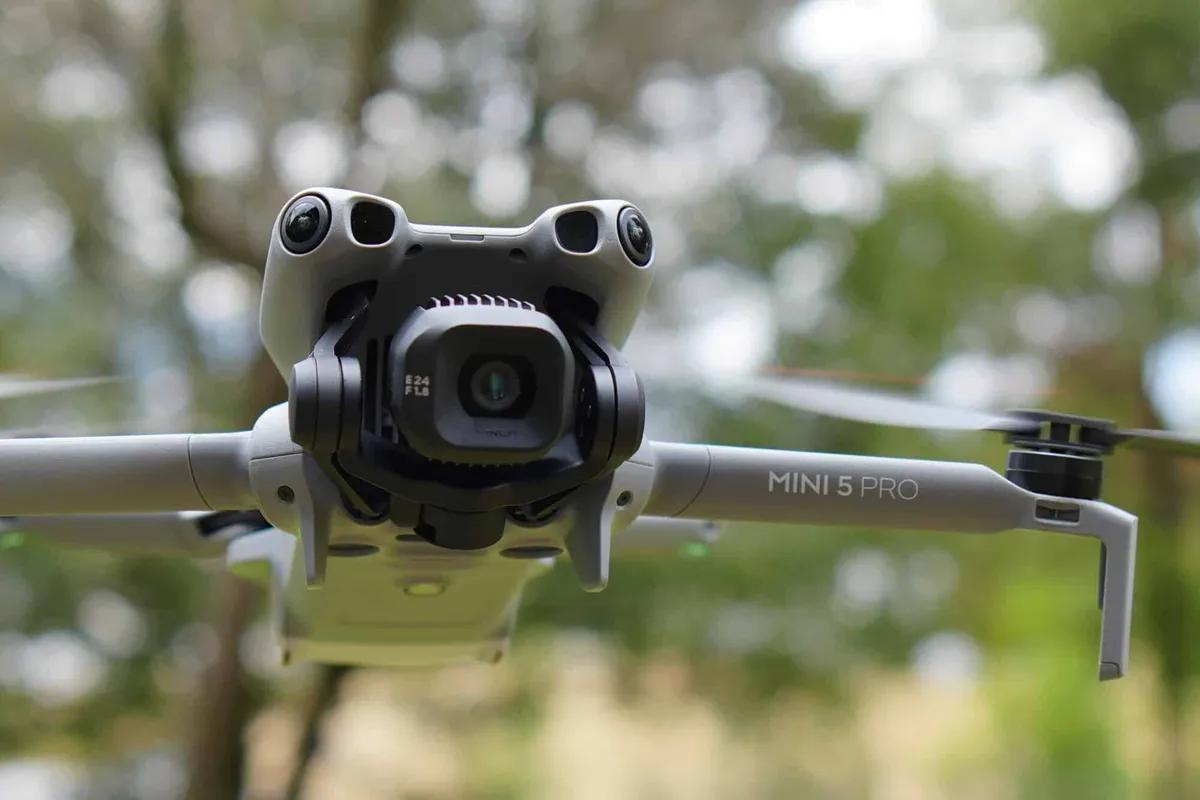
DJI Mini 5 Pro: The New King of Micro Drones?
The DJI Mini 5 Pro brought a 1-inch sensor and LiDAR to the sub-250g class. Updated for June 2026: how the new Lito line changes the picture, and the catch on US availability.

DJI’s 2026 Playbook: Pricing Shock, Modular Hardware, and the Regulatory Squeeze
DJI’s 2026 playbook was never just about new drones—it’s pricing tiers, modular hardware, and firmware rules built for a tougher regulatory world. Updated for June 2026 with a scorecard on how the predictions held up: the FCC Covered List squeeze, FrameTap-style modular gear, and the wave of U.S.-blocked launches.