
DJI’s 2026 Playbook: Pricing Shock, Modular Hardware, and the Regulatory Squeeze
DJI’s next chapter is being defined less by cinematic product reels and more by a hard reality: pricing pressure, regional compliance, and the growing need to design products that can adapt to shifting rules. The result is a market where the most meaningful clues show up in how DJI packages hardware, enforces limits through firmware, and positions accessories as functional “mode switches” rather than optional add-ons.
Here’s what those signals suggest about where DJI is heading in 2026 and beyond.
Pricing is becoming strategy, not just math
A straightforward currency conversion is no longer a reliable predictor of what buyers will pay—especially in the United States. The gap between “converted” pricing and “real-world” pricing is widening, and that spread is increasingly a deliberate business lever.
The pattern points to a few practical implications:
- Entry pricing may look attractive on paper, particularly for base configurations.
- Complete kits are where the real premium shows up, especially when controllers, extra batteries, and bundled accessories enter the picture.
- U.S. pricing is likely to remain structurally higher, reflecting distribution friction, compliance overhead, and the risk premium associated with a contentious regulatory environment.
The takeaway: expect DJI to use pricing tiers more aggressively to steer demand toward certain bundles—and to protect margin where uncertainty is highest.
“Drone-only” packages and modularity are quietly returning
One of the clearest directional shifts is renewed emphasis on “drone-only” purchase paths. That matters because it signals a world where DJI can satisfy two very different audiences at the same time:
- Enthusiasts who already own controllers or prefer custom setups.
- Mainstream buyers who want a complete, guided experience out of the box.
More importantly, modular components—particularly around transmission—suggest DJI is optimizing for regional flexibility. If certain parts can be swapped, upgraded, or region-adjusted without redesigning the entire aircraft, DJI gains a powerful advantage:
- Easier SKU differentiation by country
- Faster adaptation to compliance changes
- Better lifecycle management when rules shift mid-product cycle
In short, modularity is not just a hobbyist-friendly design choice; it is a risk-management tool.
Accessories are turning into firmware-defined “flight modes”
Prop guards used to be purely a safety accessory. Increasingly, they appear to be a trigger that changes how the aircraft is allowed to fly.
The practical concept is simple: if the drone detects guards, firmware enforces a more conservative performance envelope—think reduced speed, reduced range, and earlier return-to-home behavior. That’s good for safety, but it also reveals a broader product philosophy:
- DJI is building enforcement into the ecosystem, not just the airframe.
- The boundary between “hardware” and “policy” is being managed through software.
- A single platform can serve multiple use cases (indoor training, close-proximity work, casual outdoor flying) through accessory-detected constraints.
This is likely to expand beyond prop guards. In 2026, expect more scenarios where what you attach determines what you’re allowed to do.
Ease-of-use is re-emerging as DJI’s competitive weapon
As more niche competitors enter the market—particularly those appealing to advanced pilots—DJI’s advantage looks increasingly like something it has always been great at: making complex flying feel simple.
That “just works” experience is not a nice-to-have; it is a defensible moat. DJI can win large segments of the market without leading every spec sheet if it:
- lowers setup friction,
- reduces pilot error through software constraints,
- and keeps the learning curve approachable.
In a tightening market, ease-of-use is not a marketing slogan; it is a growth strategy.
Regulation is now a product variable
The U.S. environment is not just “background noise” anymore—it is a defining design constraint. The most consequential questions for DJI owners and buyers are no longer limited to camera quality or flight time. They increasingly look like this:
- Will firmware updates remain consistently available?
- What happens to repair channels and replacement parts?
- How will exemptions and compliance pathways work in practice?
- Could restrictions affect existing hardware, not just new sales?
When policy uncertainty is high, DJI’s product planning necessarily changes. Expect more decisions that appear “business-driven” (pricing, bundling, modular parts, segmented performance modes) but are actually responses to regulatory risk.
Mid-2026 update: this stopped being hypothetical. The FCC’s Covered List designation now blocks new U.S. equipment authorizations, and several 2026 releases — the Pocket 4, Lito line, Mic Mini 2, Osmo Mobile 8P, and Pocket 4 Pro — never reached U.S. shelves as a direct result. Existing hardware keeps working for now, but the “Could restrictions affect existing hardware?” question has shifted from theoretical to a live legal fight in the Ninth Circuit.
DJI’s 2026 ecosystem is bigger than drones
DJI is reinforcing a broader flywheel across categories—drones, handheld cameras, gimbals, microphones, and emerging form factors. The benefit of this approach is resilience: if one category faces turbulence, the ecosystem still drives revenue, user retention, and brand gravity elsewhere.
For buyers, it also means one thing: DJI’s ecosystem decisions (controllers, transmission standards, audio integrations, app features) increasingly matter as much as any single aircraft.
What to expect next
Written in January, the forecast below called for five shifts in 2026. Halfway through the year, most have already landed — modular components (FrameTap, the Lito line, the Pocket 4 Pro’s dual-camera module) and sharp market divergence (a wave of U.S.-blocked launches) are no longer predictions but facts. Here is the original list, now reading more like a checklist:
- More SKU segmentation: clearer steps between base units, standard kits, and premium bundles.
- More modularity: especially around transmission and region-dependent components.
- More firmware gating: accessory detection driving performance limits and safety profiles.
- More pricing divergence by market: with the U.S. bearing a larger premium relative to simple conversions.
- More ecosystem-driven lock-in: where the “best DJI experience” is achieved through interconnected devices and accessories.
Related Articles
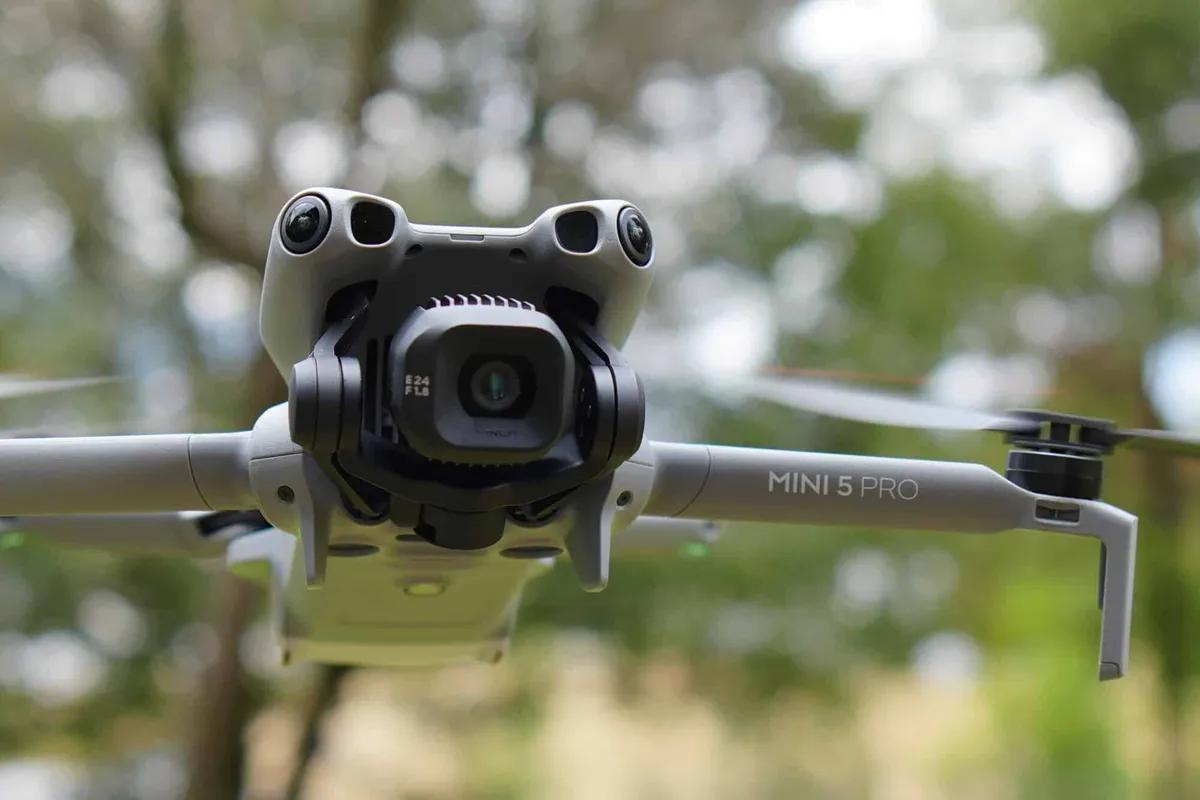
DJI Mini 5 Pro: The New King of Micro Drones?
The DJI Mini 5 Pro brought a 1-inch sensor and LiDAR to the sub-250g class. Updated for June 2026: how the new Lito line changes the picture, and the catch on US availability.
Grounded: What’s Behind the Sudden DJI Drone Shortage in the U.S.?
DJI drones suddenly went out of stock in the US in 2025 amid customs holds and looming legislation. Here is what happened — and how it escalated into the FCC Covered List ban that blocks new DJI equipment today.