DJI News Roundup: Week of June 9 – 15, 2026
Last roundup ended on a prediction: with World Cup airspace enforcement live and the tournament kicking off June 11, the first high-profile drone seizure was "almost certain." It took one weekend. This week the FBI confiscated drones and fined operators outside multiple World Cup venues, turning the abstract threat we've tracked for a month into actual federal enforcement — and by simple market arithmetic, most of the hardware hauled in was DJI. At the same time, DJI's US story slid from "stalled" to "quietly shut": the Air 4's realistic FCC deadline passed with no filing, the Pocket 4 Pro's pricing silence reached week five, and DJI's own court filing guarantees no legal relief before November. Five stories, in priority order, with our take on each.
1. The World Cup's first drone seizures land — and the enforcement machine works exactly as advertised
The FBI's Miami field office reported that in the tournament's opening days it seized nine drones and fined seven operators for temporary-flight-restriction violations near Hard Rock Stadium and the Bayfront Park Fan Festival. It wasn't isolated: parallel enforcement was reported near SoFi Stadium and the LA Coliseum and in Atlanta. The mechanism is the counter-drone stack that's been built out all year — radar, RF receivers, optical and infrared cameras, and AI detection feeding FBI "Ground Interception Teams" that locate the pilot, interview them on-site, and confiscate the aircraft. Exposure runs to $75,000 civil / $100,000 criminal, up to a year in prison, and permanent seizure. The geometry is the same one we detailed last week: a 3-nautical-mile, 3,000-foot bubble over Hard Rock on game days, and a 1-nautical-mile ring over Bayfront Park running June 13 to July 5. The tournament opened June 11.
Our take: We predicted this last week; the receipt arrived in a weekend, which is the part worth sitting with. The speed and spread — multiple cities, drones already gone, in the first few days — means this is not a "don't buzz the stadium" problem that switches on at kickoff. The interception teams are working fan festivals and, per last week, more than 100 continuous base-camp TFRs in cities hundreds of miles from any match, all the way to July 21. The catch radius is national and always-on. And here is where DJI specifically enters: no agency named brands, but with DJI sitting around 80% of the US consumer market, the confiscated fleet is overwhelmingly DJI by arithmetic alone. That turns the company's January 2024 removal of automatic geofencing from an abstraction into the operative fact of these arrests. A pre-2024 DJI drone would have refused to arm inside that bubble; a current one shows a warning you can swipe away and then flies you straight into a Ground Interception Team. DJI didn't only lose the right to sell new US hardware — it had already deleted the feature that would have protected the installed base from exactly this enforcement. If you fly anywhere near a host city, a fan festival, or a team hotel before July 21, assume you are inside a live detection net, because you are. The regulatory backdrop stays on the US availability hub, and last week's breakdown of the TFR map has the full city list.
2. The Air 4's US window closes — the FCC filing deadline came and went empty
A month after the DJI Air 4 surfaced in a Chinese flight-filing app (via leaker Igor Bogdanov) with a rumored sub-250g build, 1/1.3-inch sensor, O4+ transmission, and ~38–40 minutes of flight, the mid-June mark that a summer US launch realistically required has passed — and there is still no FCC equipment-authorization filing on record. Leak trackers have flagged none to date. The trade read is now consistent: absent a filing, a US Air 4 slips to late 2026 or 2027, even as a global summer launch stays plausible.
Our take: Last week we argued the sub-250g framing was a distraction and the FCC filing was the only variable that mattered; the deadline passing without one settles the question. The absence is the most informative non-event of the week — DJI knows a new US authorization is dead-on-arrival under the Covered List, so it isn't spending the effort, and that tells you it has already written off a 2026 US Air 4 before even announcing the drone. It's a quiet pattern with a long roster now: Pocket 4, Pocket 4P, Lito, Mic Mini 2, Osmo Mobile 8P — all US-blocked, and the Air 4 effectively joining them pre-emptively. The featherweight design will help it dodge FAA registration in every market where it's actually sold; it does nothing about the wall that matters here, which is keyed to the manufacturer's name, not the drone's mass. Track the running picture on the Air 4 hub.
3. Pocket 4 Pro pricing silence reaches week five — "coming very soon" is doing a lot of work
Thirty-two days after the Cannes reveal, the Osmo Pocket 4 Pro still has no official price, configuration ladder, or US plan. Notebookcheck this week reported the release date is "finally tipped" and "coming very soon"; Geeky Gadgets reiterated the dual-camera story — 6K/60fps, 3–4× optical zoom, 10-bit color, ActiveTrack 7.0 — and a June target. Pre-launch chatter still clusters at ~$700 / 4,999 RMB. It remains China-first, with no FCC authorization, which leaves US buyers on gray-market import.
Our take: A flagship camera going a full month past its reveal with no price isn't a delay — it's a decision. We've framed this as strategic silence every week, and week five hardens it: the early-summer creator-upgrade cycle, the exact window a Pocket launch is engineered to dominate, is now forfeited — handed to Insta360 and GoPro while DJI sits on its hands. The "coming very soon" drip reads less like a countdown and more like DJI taking the market's temperature to see whether the demand survives the silence. For US buyers it's academic regardless: even at launch this is an import with the warranty and firmware-region caveats that always entails. It stays "official pricing TBD" on the Pocket 4 hub until DJI prints a real number.
4. Two flagships, total silence: the Osmo 360 II–Insta360 X6 staredown runs out the clock
Both 360 cameras the market expected this spring-to-summer are still officially unannounced, with the June window two-thirds gone. The Osmo 360 II has only its December 9, 2025 FCC grant and a confirmed 2,150 mAh battery bump to show. The Insta360 X6's leaks are firming — 8K/60fps, 5.7K/120fps single-lens, a rumored larger sensor, ~$499–$599 — but it, too, remains unlaunched.
Our take: Hold this next to story three, because it's the opposite kind of silence. The Pocket 4P is quiet because it's US-blocked and DJI is managing a ban. The Osmo 360 II is quiet despite being one of the only new DJI products that is fully US-legal — that pre-cutoff December grant clears it to sell here. So its delay isn't regulatory at all; it's a competitive staredown. Neither DJI nor Insta360 wants to publish specs and price first and hand the rival a counter-programming target, so both are burning the launch window in a mutual hold. Two DJI silences this month, two opposite causes: one imposed by Washington, one chosen in a product-marketing meeting. The irony for US buyers is sharp — the DJI camera you can actually buy is the one DJI won't announce. We'll keep the 2026 product tracker current as the window closes.
5. Don't wait for the courts: DJI's own filing parks the ban fight until November
In its Ninth Circuit challenge (Case 26-1029, filed February 20), DJI is not seeking a fast ruling on the merits. Its filing asks the court to deny the FCC's motion to dismiss, hold the case in abeyance for roughly six months, and have the parties file a status report in November 2026. The Department of Defense's classified-intelligence opposition from April sits unrebutted on the merits in the meantime.
Our take: This reframes every "watch the courts" instinct — including ours from last week. The venue that ultimately matters is still the judiciary, but DJI itself just told that venue to wait. An abeyance is a rational play: it buys time for the political and evidentiary climate to move and avoids a rushed merits loss against secret evidence. The practical consequence for a US buyer, though, is blunt — there is no scenario in which a court reopens the US market in 2026. Stack that on the FCC's total non-response to last month's clean OnDefend audit, and the through-line is unambiguous: 2026 is a holding year, and the ban is the baseline through at least year-end. If you've been timing a DJI purchase around a legal breakthrough, stop. Buy what's available now or don't — but don't wait on a 2026 court win that even DJI isn't asking for. The US availability hub tracks what's still legal to buy today.
What we're watching next week
Five things on the radar for the week of June 16–22:
- The first criminal charge. Opening weekend produced civil fines and seizures; watch for the escalation from a $75K ticket to the year-in-prison, $100K-criminal end of the statute.
- Pocket 4P, week six. A price — or a de facto admission that it's a non-US, second-half product. There's no longer a benign reading of continued silence.
- The 360 staredown. Whether the Osmo 360 II or the Insta360 X6 blinks before the June window fully closes. First to announce sets the terms.
- A late Air 4 FCC filing. One would reopen a late-2026 US path; continued silence confirms the concession. See the Air 4 hub.
- Any FCC ex parte or legislative movement. With the court in abeyance, a regulatory or congressional path is the only thing that could change the 2026 picture.
We'll be back next week. For real-time tracking between roundups, the 2026 product tracker and US availability hub stay current.
Related Articles
DJI News Roundup: Week of July 20 – 27, 2026
Last week we told readers to circle December 31 — the day every FCC conditional drone approval was set to expire at once. Six days later the Commission deleted the date, and the way it deleted it is worse for DJI than the deadline ever was. This was the week the ban stopped being a countdown and started being architecture. Seven stories, in priority order, with our take on each.
DJI News Roundup: Week of July 13 – 20, 2026
The six-week enforcement siege ended and the ledgers came out: 600-plus drones seized, 1,139 detections, and a playbook the LA 2028 Olympics now inherits. Meanwhile the Air 4 took its biggest step yet toward a launch that will skip America, and Insta360 started writing the 360 category's price list in DJI's silence. Five stories, in priority order, with our take on each.
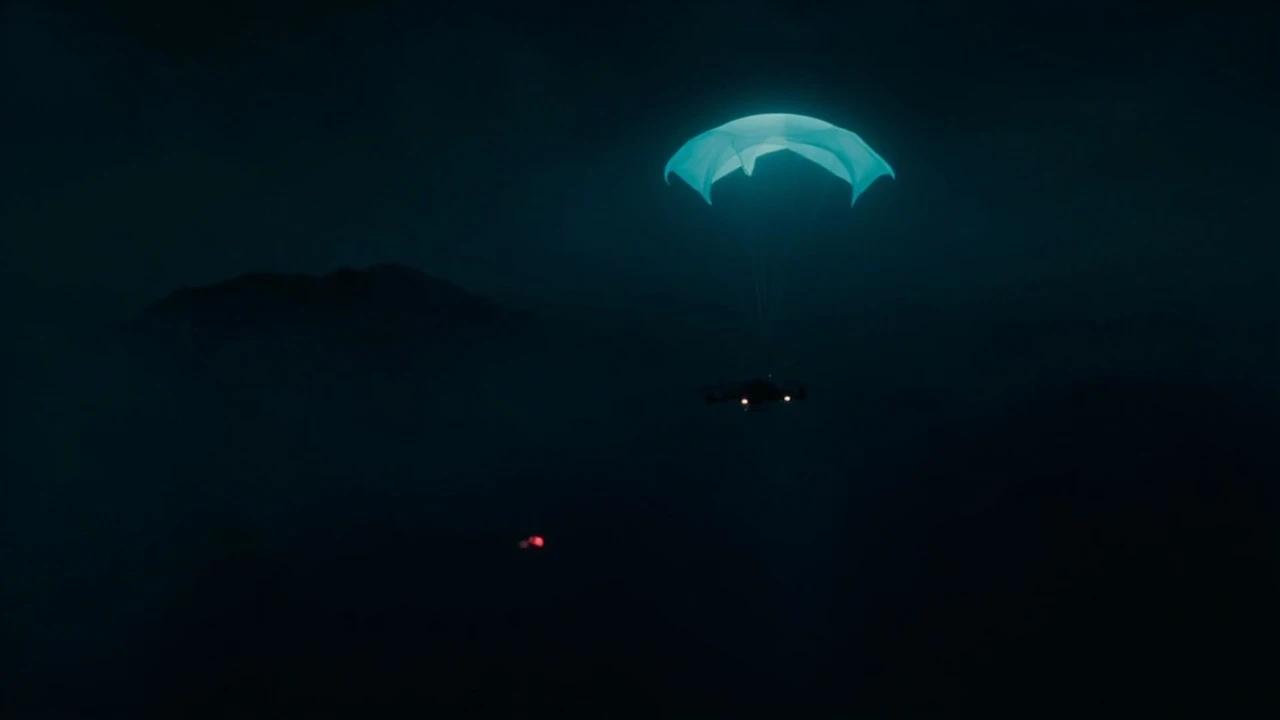
DJI News Roundup: Week of July 6 – 13, 2026
Last week we said the US door keeps opening for everyone but DJI; this week DJI showed what it's building instead. The teased 'new drone' landed as a safety parachute, a brand-new eVTOL class debuted on top of Everest, the Insta360 X6 leaked wearing the Osmo 360's body — and a mystery model code cleared Chinese certification. Five stories, in priority order, with our take on each.