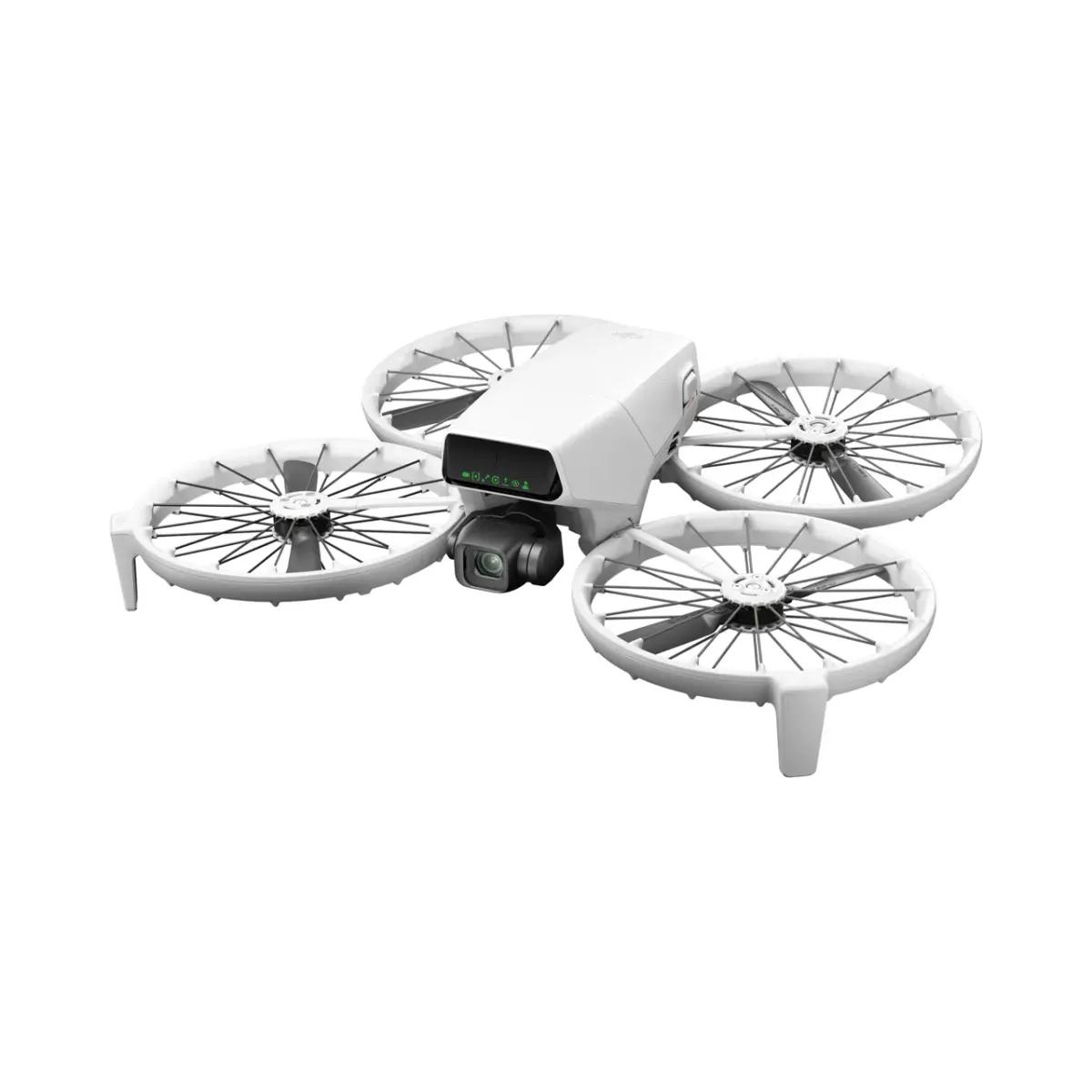
DJI Flip vs. DJI Mini 4 Pro
DJI has released two impressive drones, the DJI Flip and the DJI Mini 4 Pro, catering to different types of users. Whether you’re looking for a compact, easy-to-use autonomous drone or a feature-packed professional-grade aerial camera, this comparison will help you decide which one suits your needs.
1. Tracking and Obstacle Avoidance
- DJI Flip
- Can track subjects without a controller, making it extremely convenient.
- Uses a forward-facing LiDAR sensor for basic tracking but lacks 360° obstacle avoidance.
- Only tracks from the front and rear, making side tracking impossible.
- Tends to drift slightly in complex environments, increasing the risk of collisions.
- DJI Mini 4 Pro
- Requires a controller for tracking but offers more tracking angles and flexibility.
- Features full 360° obstacle avoidance, allowing it to track from the front, rear, sides, and even at dynamic angles.
- Automatically adjusts height for better tracking in varied terrain.
- Supports auto-track mode, letting the drone decide the best tracking path for cinematic shots.
🏆 Winner: DJI Mini 4 Pro – Offers superior tracking options, obstacle avoidance, and safety.
2. Smart Features and Flight Modes
Both drones support MasterShots and QuickShots, but the Mini 4 Pro has additional professional features.
- DJI Flip
- Tracks well and can perform Circle, Rocket, Spotlight, and Droney shots.
- Lacks advanced tracking for vehicles, boats, or other moving subjects.
- No waypoint functionality, meaning it can’t pre-program complex flight paths.
- DJI Mini 4 Pro
- Features Waypoint Missions, allowing users to program complex automated flight paths.
- Tracks multiple subjects like cars, boats, and moving objects.
- Can generate cinematic sequences using AI-powered tracking.
🏆 Winner: DJI Mini 4 Pro – Provides professional tools like waypoints and multiple tracking capabilities.
3. Control Options
- DJI Flip
- Can operate without a controller using preset flight modes.
- Can be controlled via smartphone (limited to a 50-meter range).
- Supports RC controllers for extended range and manual flying.
- DJI Mini 4 Pro
- Requires a controller for all flight modes.
- Supports DJI RC 2 and RCN3 for high-precision flying.
- Can fly farther distances using DJI’s Ocusync 4.0 transmission system.
🏆 Winner: DJI Flip – Offers greater flexibility for casual users who don’t want to carry a controller.
4. Image Quality and Video Capabilities
Both drones feature a 1/1.3-inch sensor, a 24mm lens, and support 4K up to 60fps, but there are key differences.
- DJI Flip
- Records 4K at 60fps, but vertical video is limited to 2.7K.
- Uses electronic image stabilization (EIS) instead of mechanical stabilization.
- No night mode for low-light shooting.
- DJI Mini 4 Pro
- Records 4K at 60fps and 4K vertical video, retaining full resolution in portrait mode.
- Features a mechanical 3-axis gimbal, providing superior stabilization.
- Includes night mode, allowing higher ISO levels for better low-light performance.
- Offers 1080p slow-motion recording at 200fps, compared to the Flip’s 4K 100fps.
🏆 Winner: DJI Mini 4 Pro – Delivers better stabilization, higher slow-motion frame rates, and full 4K vertical video.
5. Flight Performance and Battery Life
- DJI Flip
- Max speed: 35 mph (in Sport Mode).
- Wind resistance: Level 5 (performs worse in strong winds).
- Battery life: 31 minutes in ideal conditions (real-world ~23 minutes).
- DJI Mini 4 Pro
- Max speed: 35 mph.
- Wind resistance: Level 5 (more stable in windy conditions).
- Battery life:
- Standard battery: 33 minutes (real-world ~22 minutes).
- Plus battery: 45 minutes (real-world ~30 minutes).
🏆 Winner: DJI Mini 4 Pro – Handles wind better and has an optional extended battery for longer flights.
6. Portability and Build
- DJI Flip
- Larger due to built-in propeller guards.
- Slightly more compact when folded, but bulkier overall.
- More crash-resistant, thanks to prop guards and lightweight build.
- DJI Mini 4 Pro
- Smaller footprint, especially when folded.
- Gimbal and propellers are exposed, making it less durable in crashes.
🏆 Winner: DJI Flip – Better for travel due to built-in propeller guards and durability.
7. Pricing and Value
- DJI Flip
- Starting price: $439 (drone + controller).
- Fly More Combo: $780.
- DJI Mini 4 Pro
- Starting price: $759 (drone + controller).
- Fly More Combo: $1,159 (includes extended batteries and premium controller).
🏆 Winner: DJI Flip – More budget-friendly, costing nearly $300 less than the Mini 4 Pro.
Final Verdict: Which One Should You Buy?
| Feature | DJI Flip | DJI Mini 4 Pro |
|---|---|---|
| Tracking & Obstacle Avoidance | ✅ Basic tracking, no side tracking | 🏆 360° tracking, avoids obstacles from all angles |
| Smart Features | ✅ QuickShots, MasterShots | 🏆 Waypoints, auto-tracking, dynamic angles |
| Control Options | 🏆 Hands-free, smartphone control | ✅ Requires a controller |
| Image & Video Quality | ✅ 4K/60fps, 2.7K vertical | 🏆 4K/60fps, 4K vertical, night mode |
| Flight Performance | ✅ Decent stability, 31-min battery | 🏆 Better wind resistance, optional 45-min battery |
| Portability & Build | 🏆 More durable, built-in guards | ✅ Smaller when folded |
| Price | 🏆 $439 (cheaper) | ✅ $759 (premium features) |
Get the DJI Flip if:
✅ You want a budget-friendly drone for vlogging, social media, and fun flying.
✅ You prefer hands-free operation without a controller.
✅ You want a durable, crash-resistant drone with built-in propeller guards.
Get the DJI Mini 4 Pro if:
🏆 You need professional-grade video and tracking features.
🏆 You want 360° obstacle avoidance and side-tracking.
🏆 You fly in windy conditions and need better stability.
🏆 You create commercial content and need remote ID compliance.
Both drones offer fantastic value, but if you want autonomous, casual flying, go for the DJI Flip. If you're a content creator or professional pilot, the DJI Mini 4 Pro is the better investment.
🚀 Which drone are you getting? Let us know in the comments!
Follow us on:
X: @djirumor
bsky.app: @djirumor.com
Related Articles

The Sky's Not the Limit: What's Happening in the World of DJI Right Now
DJI's 2026 has been a flood of new gear — and a hard split between what ships worldwide and what US buyers can legally get. Here's the state of play.
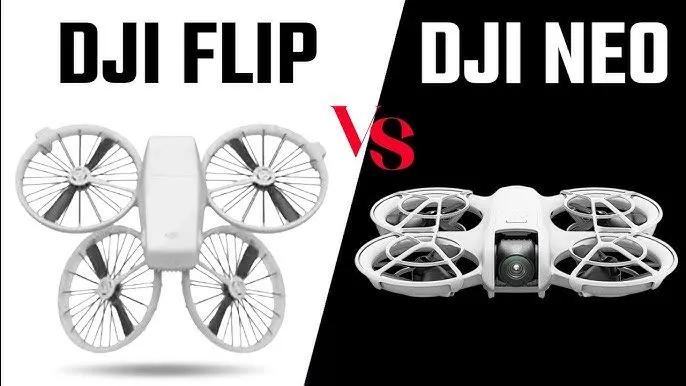
DJI Flip vs. DJI Neo: 10 Key Differences You Need to Know
The DJI Flip and DJI Neo both fly without a controller, but they target very different pilots. Here are the 10 key differences in size, camera, flight time, and price to help you choose — plus where the new Neo 2 fits in.